
Surgical · Girth enhancement · Limited published data · Off-label
Dermal Grafts
for penile girth enhancement
Dermal graft procedures place processed donor tissue — most commonly acellular dermis such as Alloderm® — beneath the penile skin to add permanent girth. They offer a more biological approach than silicone implants, but have more limited published data and are not endorsed by major urology organizations.
Dermal grafts are one of the less commonly discussed surgical options — performed by a smaller number of specialists. PhallusMD covers this procedure honestly including what limited data exists, the range of materials used, and important considerations before pursuing it.
Overview
What are dermal grafts for penile girth?
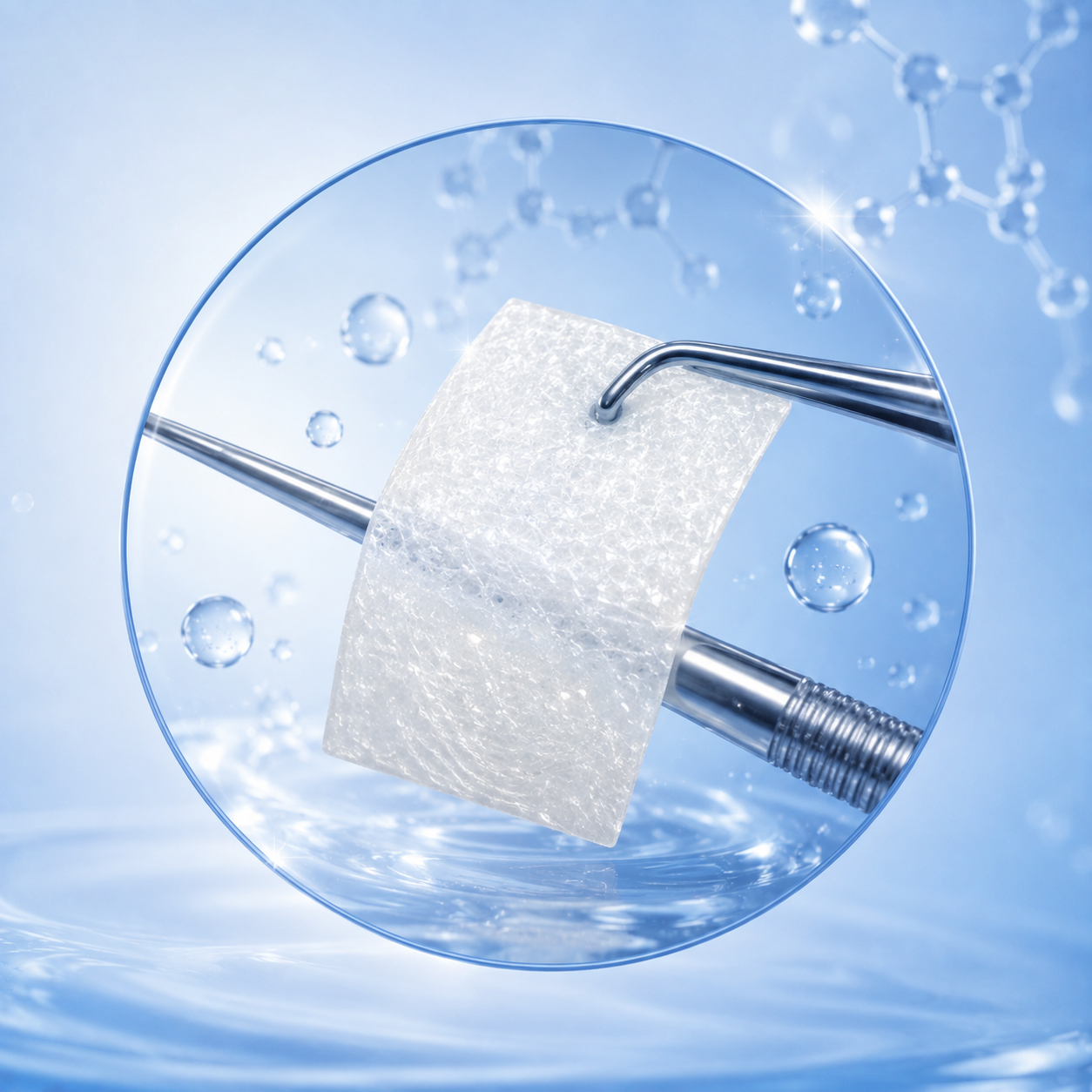
Dermal graft penile enhancement involves surgically placing a sheet of processed tissue beneath the penile skin — between the skin and the erectile cylinders. The graft adds circumferential volume, increasing girth, and integrates with surrounding tissue over time as the body partially remodels it.
Unlike injectable fillers, which are non-surgical and temporary, dermal grafts are a surgical procedure with general anesthesia, a recovery period, and permanent structural change. Unlike synthetic implants like Penuma®, the graft material is biological — derived from processed donor tissue rather than silicone.
Results are intended to be long-lasting — but like fat grafting, some degree of tissue remodeling and volume change occurs over time, making outcomes less predictable than a synthetic implant.
Published data on dermal graft penile enhancement is limited compared to both injectable filler options and IPP. Available studies are small, conducted at individual specialist centers, and lack the long-term follow-up data that would support broader professional endorsement.
This does not mean the procedure is categorically dangerous — it means patients are making a more significant decision with less certainty about long-term outcomes than with better-studied options.
Neither the AUA nor the SMSNA endorses penile graft augmentation as a standard treatment. In its 2024 position statement, the SMSNA specifically recommends against graft-and-flap procedures for penile augmentation until further outcome data are available, citing reported complications including hypertrophic scarring, penile edema, and variable patient satisfaction. Both organizations recommend that patients be fully informed of the investigational nature of these procedures before proceeding.
Materials used
What is actually being placed
Different surgeons use different graft materials. The material choice affects integration characteristics, longevity, and risk profile.
Acellular Dermis (Alloderm®)
Processed human donor dermis with cells removed, leaving the collagen matrix. Alloderm® is FDA-cleared for various soft tissue repair applications and has the longest track record in penile graft procedures, though its use specifically for penile girth enhancement is off-label. It acts as a scaffold that the patient’s own cells gradually repopulate over time. Partial resorption occurs — final volume is typically less than what is placed.
Porcine Dermis & Other Matrices
Some surgeons use porcine (pig)-derived acellular dermis or other biological matrices. These offer similar structural properties to Alloderm® with potentially different integration and resorption characteristics. Synthetic mesh materials have also been explored but carry higher complication rates and are less commonly used for this application.
Risks and complications
What to understand before proceeding
As with all surgical procedures, complications are possible. The limited published data makes precise complication rate estimates difficult — but the following have been reported in available case series and the SMSNA’s 2024 review of graft-and-flap procedures.
Infection requiring graft removal — the most serious complication
Partial graft resorption — less volume retained than placed
Contour irregularities or asymmetry from uneven integration
Hypertrophic scarring affecting appearance or sensation
Wound healing complications, including wound dehiscence, at the surgical site
Altered sensation in the penile skin — temporary or permanent
Common questions
Frequently asked questions
How is this different from Penuma®?
Penuma® uses a pre-formed silicone implant — a synthetic material with a defined shape. Dermal grafts use processed biological tissue that integrates with your own anatomy. Penuma® has published clinical data and FDA clearance; dermal grafts have more limited data and no equivalent regulatory clearance specifically for this use. Both are permanent girth procedures. The biological nature of dermal grafts appeals to men who want to avoid synthetic materials.
Does the graft affect erections or sensation?
When properly placed, the graft should not affect erectile function — it sits between the skin and the erectile cylinders. Changes in penile skin sensation have been reported in some cases — temporary numbness or altered sensitivity that usually resolves. Permanent sensation changes are less common but have been reported. Discuss this risk specifically with your surgeon.
Who should consider dermal grafts?
Men who specifically want a permanent girth enhancement using biological rather than synthetic material, who have tried and are unsatisfied with injectable filler options, and who have a thorough understanding of the limited evidence base and associated risks. This is not an appropriate first-step procedure — non-surgical options should be explored thoroughly first. Finding a specialist with genuine experience in this specific procedure is essential.
What do medical organizations say about this procedure?
The Sexual Medicine Society of North America (SMSNA) issued a formal position statement in 2024 recommending against graft-and-flap procedures for penile augmentation until further outcome data are available, citing reported complications and the investigational nature of the surgery. The American Urological Association has separately stated that related soft-tissue augmentation techniques for penile girth have not been proven safe or effective. Neither organization has issued an endorsement for this specific procedure.
Consider first
Non-surgical alternatives
Find a specialist
Dermal graft procedures require a surgeon with specific experience in this technique. Search our provider directory or join the forum to hear from men who have explored surgical girth options.
Key sources: Trost et al., “Cosmetic Penile Enhancement Procedures: An SMSNA Position Statement,” Journal of Sexual Medicine (2024) · SMSNA patient summary of its position on cosmetic penile enhancement · AUA position statement on penile augmentation surgery
This page is for informational purposes only. Dermal graft penile enhancement is not endorsed by the AUA or SMSNA. Always consult a board-certified urologist with specific experience in this procedure. Alloderm® is a registered trademark of LifeNet Health. Results vary and are not guaranteed.
There are no reviews yet. Be the first one to write one.