
Regenerative Treatment · Emerging · Investigational
Exosome Therapy
for male sexual health
Exosomes are extracellular vesicles being studied for their role in cell signaling, tissue repair, and regenerative medicine. In male sexual health, they are explored as a potential support for erectile function and tissue health — though evidence is still emerging and no FDA-approved exosome products currently exist.
PhallusMD covers exosome therapy honestly — including its potential, the current limits of evidence, and important FDA safety information patients should know before pursuing this treatment.
Overview
What are exosomes?
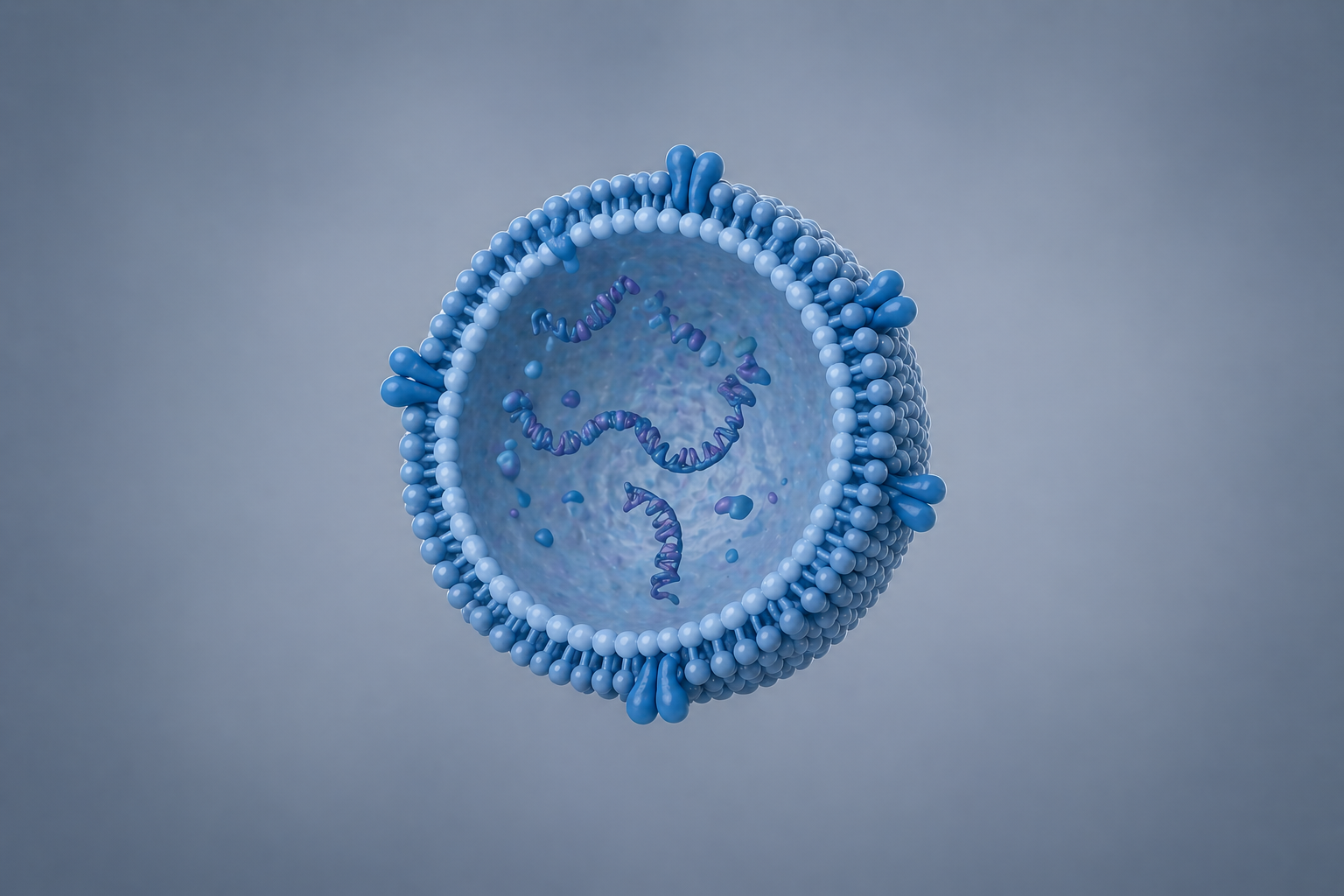
Exosomes are tiny extracellular vesicles — small membrane-bound packages released naturally by cells. They carry signaling molecules including proteins, lipids, and genetic material (RNA) that allow cells to communicate with each other, influencing inflammation, healing, and tissue behavior.
Researchers are studying exosomes across many fields because they may act as natural messengers that support tissue repair, modulate the immune response, and promote regeneration — without introducing living cells.
In male sexual health, exosomes are being explored for their potential to support penile tissue repair, improve blood vessel signaling, and create a healthier erectile tissue environment — particularly in men where vascular or tissue-related decline is contributing to erectile dysfunction.
PRP uses concentrated platelets from your own blood to deliver growth factors directly. The source is autologous — your own biology.
Stem cell therapy aims to introduce living cells with regenerative potential. Exosomes are not living cells — they are signaling vesicles, typically derived from donor biologic sources rather than the patient’s own blood.
This means exosomes operate through a different mechanism — cell-to-cell communication and signaling — rather than direct tissue replacement or growth factor delivery from platelets.
Healthy erections depend on blood flow, nerve function, smooth muscle health, and tissue quality. Exosomes are studied because they may support the signaling environment involved in these processes — potentially promoting angiogenesis, reducing inflammatory signals, and supporting tissue remodeling.
Most evidence is currently preclinical or from early restorative medicine literature. Large-scale human trials are still needed.
What men seek from exosome therapy
Common treatment goals
Men researching exosome therapy are typically looking for non-surgical options that go beyond symptom management to address underlying tissue health. These are treatment goals commonly associated with regenerative sexual medicine — not outcomes guaranteed by current evidence.
Stronger erection quality and improved rigidity
Improved blood flow support and vascular health
Better penile tissue health and regeneration
Enhanced recovery from age-related or vascular decline
Poor or declining response to oral ED medications
A non-surgical male wellness option without synthetic substances
How it compares
Exosomes vs. stem cells vs. PRP for ED
All three are classified as investigational for erectile dysfunction by major professional guidance. They differ significantly in source, mechanism, and evidence base.
| Feature | Exosomes | Stem Cell Therapy | PRP (P-Shot®) |
|---|---|---|---|
| What it is | Cell-derived signaling vesicles | Living regenerative cells | Concentrated platelets from your own blood |
| Main mechanism | Cell signaling, tissue communication | Cellular regeneration potential | Growth factor delivery |
| Typical source | Donor-derived biologic product | Autologous or donor-derived | Patient’s own blood (autologous) |
| Contains living cells? | No | Yes | No |
| FDA-approved for ED? | No — no approved exosome products | No | No — off-label use |
| Evidence in ED | Early, limited — mostly preclinical | Early, limited — investigational | More studied than others — still investigational |
| Professional society position | Investigational | Investigational | Investigational |
| Allergy / rejection risk | Possible — donor-derived | Variable by source | Minimal — autologous |
Have a question about exosome therapy?
Ask men who’ve explored regenerative treatments — real answers from the community.
Understanding the evidence
Where the evidence stands today
Exosome therapy is one of the most discussed topics in regenerative medicine broadly — but enthusiasm in the field often runs ahead of the clinical evidence, particularly for sexual health applications.
Current evidence for exosomes in erectile dysfunction consists primarily of preclinical research (animal models) and early restorative medicine literature. High-quality, sham-controlled, multi-center human trials have not yet been completed.
Leading sexual medicine organizations — including those that publish guidelines on ED treatment — classify exosomes, PRP, and stem cell therapies collectively as investigational, meaning promising but not yet proven to the standard required for established clinical care.
Investigational — not established care
Major professional guidance classifies all restorative ED therapies including exosomes as investigational. More standardized, sham-controlled multi-center trials are needed before this changes.
Preclinical + early human interest
Animal model studies and early restorative medicine reports suggest potential interest in angiogenesis, tissue remodeling, and inflammatory signaling — but this is not equivalent to proven clinical efficacy.
Large-scale human RCTs
Randomized, placebo-controlled, multi-center trials in humans with long-term follow-up are the standard required to move a treatment from investigational to established care. These have not been completed for exosomes in ED.
There are currently no FDA-approved exosome products
The FDA has repeatedly stated that there are currently no FDA-approved exosome products for any indication. Unapproved regenerative products — including exosomes, stem cells, and similar therapies — may carry real risks when not properly regulated.
This does not mean every clinic offering exosome therapy is operating improperly. It does mean patients should ask specific questions about what is being used, where it comes from, how it is processed, and whether it is being offered in a compliant clinical setting.
Before pursuing treatment
Questions to ask any provider offering exosomes
A responsible provider should answer all of these clearly and honestly.
What exactly is in the product — what is the source and how is it processed?
Is this product compliant with FDA regulations? How?
What published evidence supports this specific protocol?
What realistic outcomes should I expect for my specific situation?
What alternatives exist — PRP, shockwave, medications — and how do they compare?
Is this being offered as established care or as an investigational approach?
What are the risks, and how are they managed at your clinic?
Have you had patients with my profile treated with this? What were the outcomes?
Common questions
Frequently asked questions
Are exosomes FDA approved for erectile dysfunction?
No. The FDA has stated that there are currently no FDA-approved exosome products for any indication, including erectile dysfunction. Exosome therapy for ED is offered as an investigational or off-label treatment. Patients should ask their provider specifically about regulatory compliance before proceeding.
Are exosomes the same as stem cells?
No. Exosomes are not living cells — they are small vesicles released by cells that carry signaling molecules. Stem cell therapy aims to introduce living cells with regenerative potential. They are related areas of regenerative medicine but work through different mechanisms and have different regulatory and safety profiles.
How do exosomes compare to PRP for ED?
PRP has been studied more extensively in men with erectile dysfunction than exosomes — including some randomized controlled research. Both are classified as investigational for ED by major professional guidance, but PRP is the more familiar and more-studied option. Exosome therapy is newer, with much of the interest driven by preclinical research rather than large human trials.
Where do exosomes come from if not my own blood?
Unlike PRP, which is derived from the patient’s own blood, exosome products used in clinical settings are typically derived from donor biologic sources — often processed from mesenchymal stem cells or other cell lines. This means they are not autologous, and patients should ask specifically about the source, processing standards, and safety testing of any product being offered.
Who might consider exosome therapy?
Men who have not responded well to established ED treatments, who have vascular or tissue-related erectile dysfunction, and who want to explore regenerative options beyond PRP sometimes inquire about exosome therapy. A full evaluation with a qualified provider is important — ED can have cardiovascular, hormonal, or psychological components that should be assessed before pursuing any regenerative therapy.
Related treatments
Also in regenerative medicine
Questions about exosome therapy?
Join our anonymous forum to hear from men who have explored regenerative ED treatments, or search our provider directory for vetted physicians in this space.
Want to go deeper?
Join the men already discussing exosome therapy in the community forum. Ask anything — real conversation, real experience.
Join the discussion →🔒 Create a free anonymous account to post
This page is for informational purposes only and does not constitute medical advice, diagnosis, or treatment recommendations. Exosome therapy for erectile dysfunction is investigational. There are currently no FDA-approved exosome products. Always consult a licensed physician before pursuing any regenerative therapy. PhallusMD does not endorse specific providers or guarantee clinical outcomes. Evidence assessments reflect published literature and regulatory guidance as of 2026 and may change as research evolves.
There are no reviews yet. Be the first one to write one.