
⚠ Safety Warning · Not recommended · Underground procedure
Silicone Injections
for penile enlargement
Liquid silicone injections for penile girth enhancement are not recommended by any reputable medical organization. They are performed primarily in underground, non-medical settings — and carry severe, often irreversible risks that can result in permanent disfigurement and complex reconstructive surgery.
This page exists because men encounter silicone injections online, abroad, and through informal networks — often without understanding what they are agreeing to. PhallusMD covers this honestly so you can make an informed decision. This is not a treatment we endorse, recommend, or direct providers to offer.
Overview
What are silicone injections?
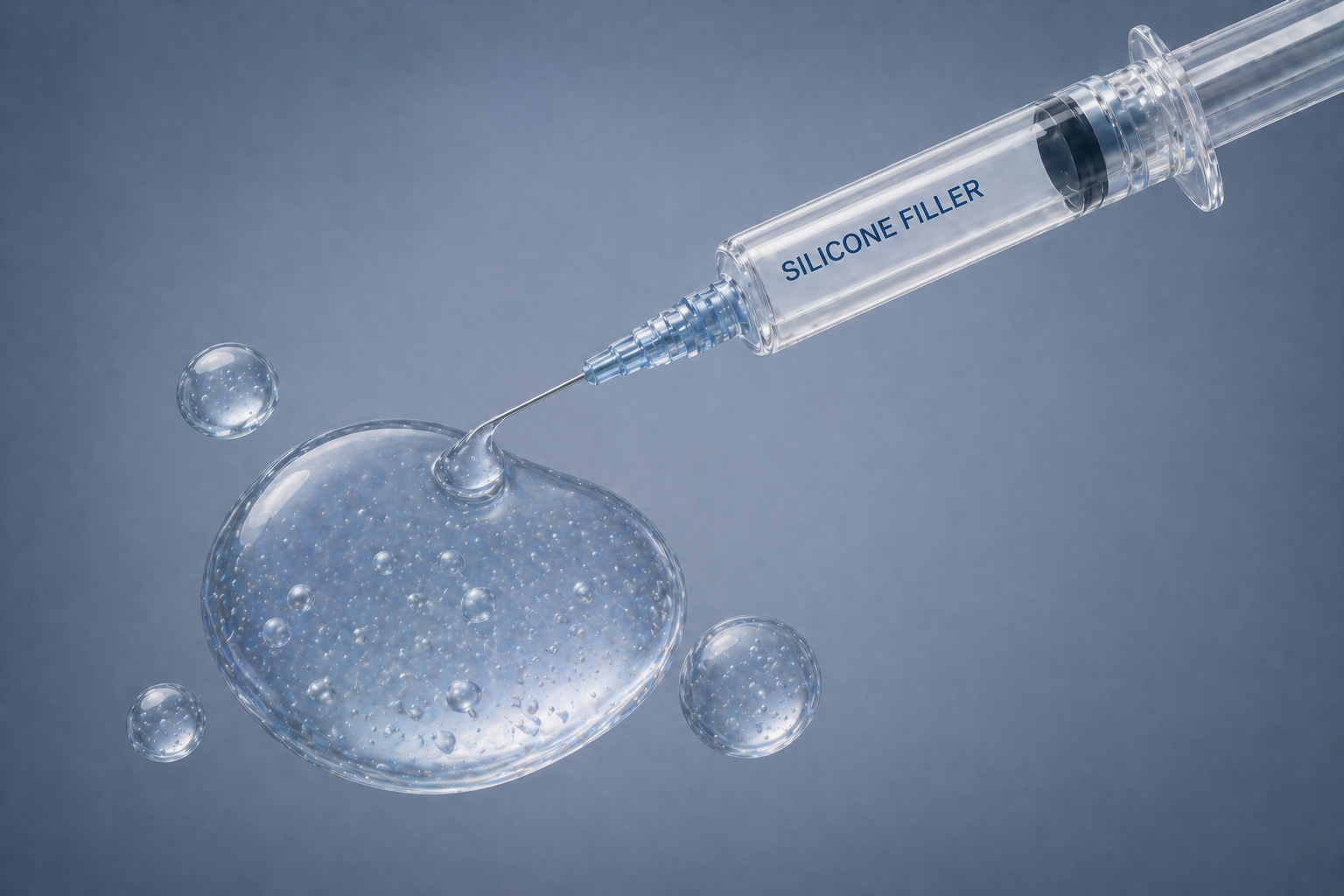
Liquid silicone injections involve injecting free-form silicone oil directly beneath the skin of the penis to increase girth. Unlike medical-grade implants — where silicone is enclosed in a shell — free silicone is injected as a loose liquid that the body cannot safely contain, control, or remove.
These procedures are almost never performed in licensed medical settings. They are carried out by unlicensed individuals in homes, informal clinics, hotel rooms, and overseas facilities — typically with no sterile protocol, no imaging, and no dosing control.
The appeal is the same as any unregulated procedure: lower cost, no medical gatekeeping, and promises of permanent enhancement. The reality is a well-documented pattern of severe complications — many of which appear months or years after the injection and require complex surgery to address, often incompletely.
The FDA has not approved liquid silicone injections for cosmetic body contouring of any kind. The agency has specifically warned consumers about the dangers of injectable silicone for body augmentation, including cases resulting in serious injury and death.
Industrial and non-medical-grade silicone is sometimes used in underground procedures — compounding the risk significantly. Even medical-grade silicone, when injected freely into tissue, is not considered safe for penile enhancement.
Medical silicone implants — such as breast implants or the Penuma® penile implant — contain silicone within a structured, enclosed shell. The silicone does not move freely through tissue. This is fundamentally different from free liquid silicone injections, which have no containment mechanism and migrate unpredictably.
⚠ Complications
Why silicone injections cause serious harm
Complications from penile silicone injections are well-documented in the urological and reconstructive surgery literature. They are not rare edge cases — they represent the expected outcome of an inherently unsafe procedure.
Granuloma formation
The body recognizes silicone as a foreign substance and mounts a chronic inflammatory response. This creates hard, often painful nodules (granulomas) throughout the injected tissue — causing lumpy, irregular appearance and significant discomfort.
Common · Can appear months to years after injection
Silicone migration
Free silicone moves through tissue unpredictably over time. It has been documented migrating from the penis into the scrotum, groin, perineum, and lower abdomen — causing complications far beyond the original injection site.
Common · Migration can continue for years
Severe deformity and asymmetry
Between granuloma formation and silicone migration, the penis frequently develops severe irregular shape, asymmetry, and a hardened “lumpy” texture that bears no resemblance to the result originally sought. This is often permanent without surgery.
Very common · Often irreversible without reconstruction
Chronic infection
Silicone creates a reservoir for bacterial colonization. Chronic, treatment-resistant infections are commonly reported. The silicone itself must often be removed surgically before infection can be controlled — and complete removal is rarely possible.
Common · Often requires surgical intervention
Skin necrosis and ulceration
Chronic inflammation and compromised blood supply from silicone can lead to tissue breakdown, skin necrosis, and ulceration. In severe cases, significant skin loss occurs — requiring grafting and complex reconstruction.
Less common but severe · Can result in permanent disfigurement
Erectile dysfunction
Damage to penile vasculature, nerves, and deeper structures from inflammation and mechanical pressure can cause or worsen erectile dysfunction — the exact opposite of the intended outcome for many men who seek enhancement.
Reported · Mechanism varies by case
How complications develop
The deceptive timeline of silicone complications
One of the most dangerous aspects of silicone injections is that early results can appear acceptable — leading men to believe the procedure was successful before complications fully emerge. Medical literature consistently documents this pattern.
Apparent girth increase
Swelling from the procedure creates the appearance of enhancement. Some patients initially report satisfaction — this is the window in which providers collect payment and patients recommend the procedure to others.
First complications appear
Granulomas begin forming. Irregular texture and hardness develops. Swelling recedes to reveal asymmetry. Some migration begins. Patients often return to the provider — who may inject more silicone, worsening the situation.
Severe complications require medical care
Silicone has migrated. Deformity is significant. Infection may be present. Patients present to urologists and reconstructive surgeons — often years after the original procedure — requiring complex multi-stage surgery with limited correction possible.
What published research shows
Medical literature on silicone penile injections
Published urological and reconstructive surgery literature consistently documents the same pattern: men presenting with severe complications requiring complex surgical correction, often years after underground silicone injections.
Case series and retrospective studies from reconstructive urology departments report patients requiring penile skin excision, grafting with donor tissue or dermal grafts, and multi-stage reconstruction procedures — with cosmetic and functional outcomes that are significantly worse than the patient’s original baseline.
There are no published studies demonstrating a safe or effective protocol for free liquid silicone penile injection. The medical consensus is unambiguous — this is not a procedure that can be made safe through improved technique or better materials.
Surgeons performing corrective procedures after silicone injections consistently report that complete silicone removal is rarely achievable. Silicone infiltrates tissue planes and cannot be fully excised without removing significant amounts of normal tissue.
Patients typically undergo multiple surgeries. Final cosmetic outcomes are often significantly worse than the patient’s pre-injection baseline — in some cases requiring penile skin replacement with grafts from other body sites.
The American Urological Association, the Sexual Medicine Society of North America, and the European Association of Urology do not recognize free liquid silicone injection as an acceptable treatment for penile enhancement. It is explicitly discouraged in professional guidance on male genital cosmetic procedures.
⚠ Warning signs
Red flags for unsafe providers or settings
If you encounter any of the following, do not proceed — these are indicators of an unregulated, high-risk procedure.
Procedure offered in a non-medical setting — home, hotel, informal clinic, or spa
Cash-only payment with no formal invoice or medical records
No formal consultation, medical history review, or informed consent
Promises of “permanent” or “risk-free” enhancement
Provider cannot explain what material they are using or where it is sourced
Significantly lower cost than any legitimate medical procedure
Referral through informal networks, social media, or word-of-mouth only
No follow-up care offered or available after the procedure
How it compares
Silicone vs. medically appropriate girth enhancement
Every medically appropriate alternative offers a substantially better safety profile. The cost difference does not justify the risk.
| Feature | Silicone Injections | HA Fillers | P-Thick™ (DermaPRP) | Fat Grafting |
|---|---|---|---|---|
| Medical oversight | None — underground | Licensed physician | Licensed physician | Licensed physician |
| FDA status | Not approved — warned against | Off-label — FDA-approved material | Off-label — autologous PRP | Surgical — physician-managed |
| Reversible? | No — permanent, surgery often required | Yes — hyaluronidase | No — reabsorbs naturally | No — variable reabsorption |
| Complication risk | Very high — granuloma, migration, necrosis | Low with experienced provider | Low — autologous material | Moderate — harvest site, variable retention |
| Correctable if wrong | Rarely — surgery often incomplete | Yes — dissolve and redo | Limited — must reabsorb | Limited — surgical correction |
| PhallusMD recommendation | Do not pursue | Appropriate — see full page | Appropriate — see full page | Appropriate — see full page |
⚠ If you have already received silicone injections
What to do if you’ve already had this procedure
If you have received silicone injections and are experiencing complications — or even if you currently have no symptoms — the following steps are important.
Seek evaluation from a reconstructive urologist
Do not wait for symptoms to worsen before seeking medical evaluation. Silicone complications can develop slowly and become significantly more difficult to address if left untreated. Early evaluation gives you the most options.
Contact a board-certified urologist or reconstructive urologist — not a general practitioner or the original provider. Reconstructive urology is a specialized field with experience in silicone complication management.
Be completely honest about what was injected, when, and how much. Withholding this information makes evaluation and treatment planning significantly harder. There is no judgment — physicians who manage these cases have seen this many times.
Imaging (MRI or ultrasound) may be used to assess silicone distribution and extent of involvement before any surgical planning is discussed. Do not let anyone attempt surgical correction without this evaluation first.
Understand that treatment is a process — not a single procedure. Managing silicone complications typically requires staged surgery. Setting realistic expectations from the start leads to better outcomes.
Consider psychological support. The experience of complications after a procedure performed in secret, often with significant regret, can be isolating and distressing. This is a recognized aspect of silicone complication care — you are not alone.
Common questions
Frequently asked questions
Are silicone injections ever safe under any circumstances?
No. Free liquid silicone injections for penile enhancement are not considered safe under any circumstances — regardless of the provider, setting, or material grade. The mechanism of harm (chronic foreign body reaction, migration, granuloma formation) is inherent to free silicone in tissue and cannot be mitigated through technique. Medical organizations do not recognize a safe protocol for this procedure.
What if I had silicone done and currently have no symptoms?
Silicone complications frequently develop months to years after the original injection. Having no current symptoms does not mean you will not develop complications — it may simply mean they have not yet emerged. A medical evaluation is still appropriate. An experienced urologist can assess the current situation and discuss realistic expectations going forward.
Can silicone be completely removed?
Rarely, if ever, completely. Silicone infiltrates tissue planes and cannot be fully excised without removing significant amounts of surrounding tissue. Surgery typically involves removing the most affected tissue, addressing granulomas, and reconstructing with grafts — but residual silicone usually remains. This is why prevention is the only truly effective approach.
Why do people still get silicone injections if they are so dangerous?
Several factors: cost (silicone injections are far cheaper than legitimate medical procedures), lack of awareness of the risks, aggressive online and word-of-mouth marketing from providers, and the deceptive early appearance of results that look acceptable before complications develop. This is why pages like this one exist — informed patients make safer decisions.
What are safe alternatives for girth enhancement?
HA fillers, P-Thick (DermaPRP), biostimulatory fillers, and fat grafting are all medically appropriate options when performed by licensed physicians. HA fillers are reversible — the most appropriate starting point for most men. All four have dedicated pages on PhallusMD with full explanations of how they work, what to expect, and how to choose the right provider. See the safe alternatives section below.
Medically appropriate alternatives
Safe girth enhancement options to explore instead
All four options below are performed by licensed physicians, use medically appropriate materials, and have established safety profiles.
HA Fillers
Immediate girth, reversible with hyaluronidase — the safest starting point for first-time patients, with the ability to correct any unsatisfactory result
Autologous · NaturalP-Thick™ (DermaPRP)
Your own blood, processed into a filler — no synthetic materials, no allergy risk, medically supervised
Gradual · Longer-lastingBiostimulatory Fillers
Stimulates your own collagen production over time — subtle, progressive results lasting 18–24+ months
Looking for a safe provider?
Search our directory of vetted, licensed physicians offering medically appropriate girth enhancement — or join the forum to ask questions anonymously.
This page is for informational and harm-reduction purposes only. It does not constitute medical advice. If you have received silicone injections and are experiencing complications, seek evaluation from a board-certified reconstructive urologist promptly. PhallusMD does not recommend, endorse, or facilitate access to silicone injection procedures. Evidence and organizational positions referenced reflect published literature and professional guidance as of 2026.
There are no reviews yet. Be the first one to write one.