
Toxin-Based Treatment · Off-label · Emerging evidence · Non-surgical
Priapus Toxin
(Bocox)
Botulinum toxin type A injected into penile smooth muscle to promote relaxation and potentially improve blood flow during arousal — an emerging non-surgical approach for men with erectile dysfunction who have not fully responded to oral medications.
Bocox is an off-label application of an established medical substance. Early published studies show promising results in erectile function scores. This page covers the mechanism, evidence, what to expect, and how it compares to other ED treatments.
Overview
What is Priapus Toxin (Bocox)?
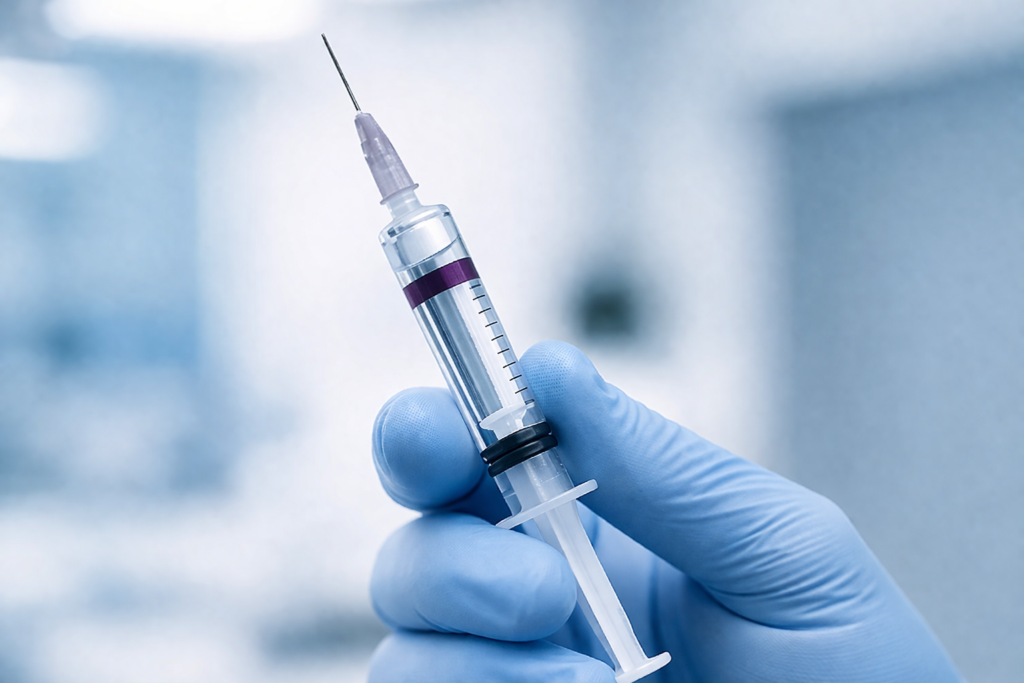
Priapus Toxin — branded as Bocox by its developer Dr. Charles Runels — involves injecting botulinum toxin type A directly into the smooth muscle of the penis. The goal is to create temporary relaxation of the smooth muscle that lines erectile tissue, potentially improving blood flow during arousal and supporting erectile function.
Erections depend on smooth muscle relaxation in the corpora cavernosa — the two chambers of erectile tissue that fill with blood during arousal. In men with vascular ED, this smooth muscle may be in a state of inappropriate contraction, limiting blood inflow. Botulinum toxin targets this contraction directly.
Unlike medications like Viagra which work acutely on demand, Bocox aims to shift the baseline tone of penile smooth muscle — creating a sustained improvement window rather than requiring a pill before activity.
Penile erection requires smooth muscle relaxation in the corpora cavernosa. When this smooth muscle relaxes, blood flows in freely and fills the erectile chambers. When it contracts inappropriately — as can occur in vasculogenic ED — blood inflow is restricted regardless of arousal.
Botulinum toxin blocks acetylcholine release at the neuromuscular junction, causing temporary muscle relaxation. Applied to penile smooth muscle, this may create a more favorable baseline for erectile response — reducing the resistance to blood inflow during arousal.
The Priapus Toxin protocol was developed by Dr. Charles Runels — the same physician who created the P-Shot® protocol. Like the P-Shot, it is named for Priapus, the Greek deity associated with male fertility and virility.
The procedure
What to expect
Consultation
Your provider reviews your ED history, current medications, and determines whether Bocox is appropriate — particularly whether vascular smooth muscle tone may be contributing to your erectile difficulties.
Numbing
A topical numbing cream is applied to the injection site for 20–30 minutes before the procedure to minimize discomfort.
Botulinum toxin injection
A precise dose of botulinum toxin is injected into the penile smooth muscle using a fine needle. The procedure takes only a few minutes. Most men report minimal discomfort with adequate numbing.
Recovery and onset
No significant downtime. Effects develop gradually over 2–4 weeks as the botulinum toxin takes effect on smooth muscle tone. Most men notice improvement within this window. The effect wears off naturally over 3–6 months.
Bocox is frequently used alongside shockwave therapy and PRP (P-Shot). The rationale: shockwave addresses vascular repair, PRP provides regenerative growth factors, and Bocox reduces smooth muscle tone — addressing three different mechanisms of vasculogenic ED simultaneously.
This combination is increasingly discussed in sexual medicine circles as a comprehensive non-surgical ED protocol, though large-scale combination trial data is still emerging.
Clinical evidence
What the research shows
Published research on Bocox is early-stage but directionally positive. Key findings from published studies are summarized below.
Improvement in IIEF scores
Multiple small published studies report meaningful improvement in International Index of Erectile Function (IIEF) scores following botulinum toxin injection into penile smooth muscle — the standard clinical measure of erectile function. Some studies also report improvements in penile blood flow parameters measured by Doppler ultrasound.
Small studies, no large RCTs yet
Published studies to date involve small patient populations. Large-scale, randomized, placebo-controlled multicenter trials — the standard for establishing mainstream clinical endorsement — have not yet been completed. Results are promising but should be viewed as emerging rather than established evidence.
Botulinum toxin has FDA-approved applications in urology — specifically for overactive bladder and urinary incontinence. The mechanism in those applications (smooth muscle relaxation in the bladder detrusor) is directly analogous to the proposed mechanism in penile smooth muscle. This established urological precedent lends biological credibility to the Bocox concept, even as penile-specific trials are still developing.
How it compares
Bocox vs. other ED approaches
| Feature | Bocox | Shockwave Therapy | P-Shot® (PRP) | ED Medications |
|---|---|---|---|---|
| Mechanism | Smooth muscle relaxation | Vascular repair | Growth factor regeneration | PDE5 inhibition |
| Works on demand? | No — sustained baseline effect | No — gradual improvement | No — gradual improvement | Yes — acute effect |
| Requires daily pill? | No | No | No | Yes (or as needed) |
| Duration | 3–6 months | Months to 1+ year | 12–18 months | Hours |
| Evidence level | Early studies — promising | Strongest non-surgical evidence | Investigational | Established first-line |
| Can be combined? | Yes — often with shockwave + PRP | Yes — often with PRP + Bocox | Yes — often with shockwave + Bocox | Yes — with any of the above |
Is it right for you?
Who may benefit from Bocox
Men with mild to moderate vasculogenic ED who have not fully responded to oral medications
Men who want to avoid taking a pill before every sexual encounter
Men exploring combination non-surgical ED protocols alongside shockwave and PRP
Men comfortable with an off-label, emerging treatment with promising early evidence
Men who want a temporary, reversible option they can assess before committing to longer-term treatments
Men without contraindications to botulinum toxin (discuss with your provider)
Common questions
Frequently asked questions
Is Bocox the same as getting Botox in the penis?
In essence, yes — it uses the same active substance (botulinum toxin type A) but in a specific protocol targeting penile smooth muscle for the purpose of improving erectile function. “Bocox” refers to the specific Priapus Toxin protocol developed by Dr. Runels. The substance is identical to cosmetic Botox; the application and intended effect are different.
How is Bocox different from the P-Shot?
The P-Shot uses PRP — concentrated growth factors from your own blood — to support tissue regeneration and improved vascular health over weeks to months. Bocox uses botulinum toxin to relax smooth muscle tone, creating a different and more immediate (2–4 week onset) effect. They target different mechanisms and are frequently used together as complementary approaches.
Will Bocox affect erection size or sensation?
Bocox is not a size enhancement treatment. Some men report improved erection quality and firmness as a result of better blood inflow — which may affect perceived fullness during erection — but this is a functional improvement, not a structural size change. There is no documented negative effect on sensation at appropriate dosing.
What happens when it wears off?
Effects gradually diminish over 3–6 months as the botulinum toxin is metabolized. There is no sudden return — the wearing off is gradual. Men who find benefit typically choose to repeat the treatment to maintain results. Some providers and patients report that repeated sessions over time may produce cumulative benefit beyond the direct temporary effect.
Related treatments
Commonly combined with Bocox
Find a Bocox provider
Search our directory of vetted physicians offering Priapus Toxin — or join the forum to hear from men who have been through the treatment.
This page is for informational purposes only and does not constitute medical advice. Priapus Toxin (Bocox) is an off-label use of botulinum toxin type A — not FDA-approved for erectile dysfunction. Always consult a licensed physician before pursuing any treatment. Results vary by individual and are not guaranteed. Priapus Toxin® and Bocox® are trademarks of Charles Runels, MD. Botox® is a trademark of Allergan Aesthetics.
There are no reviews yet. Be the first one to write one.